Three scenes in the heat
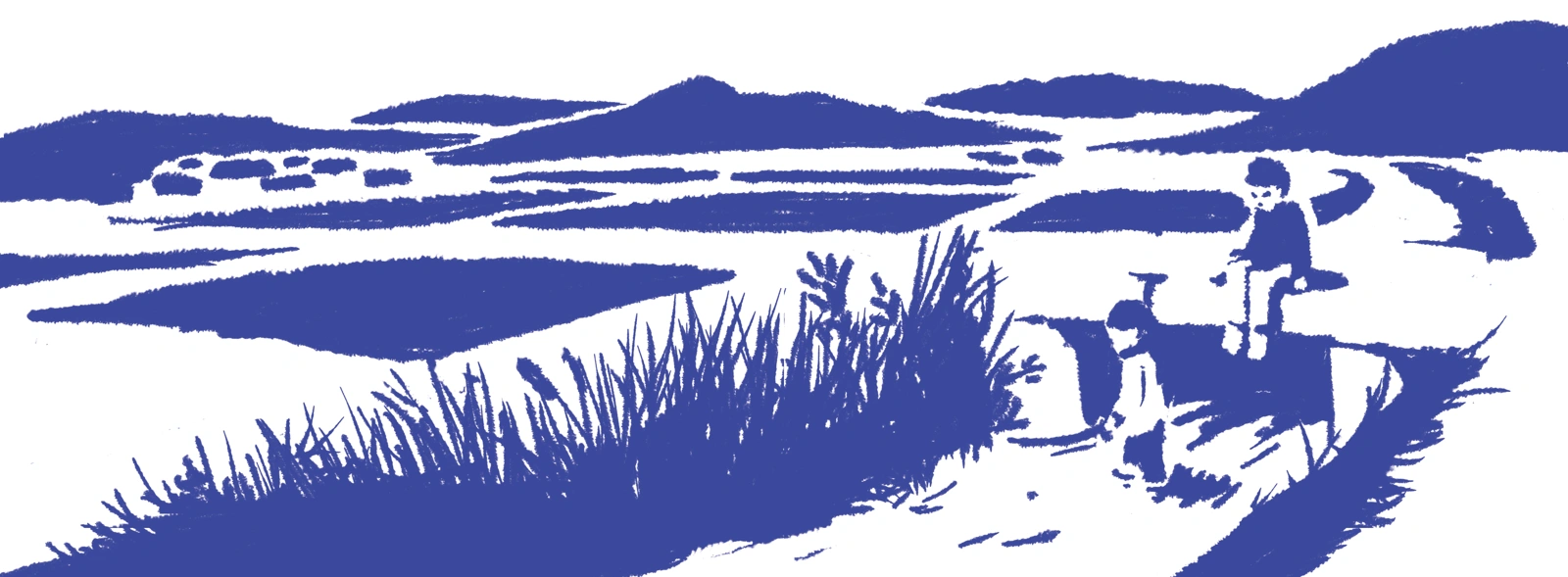
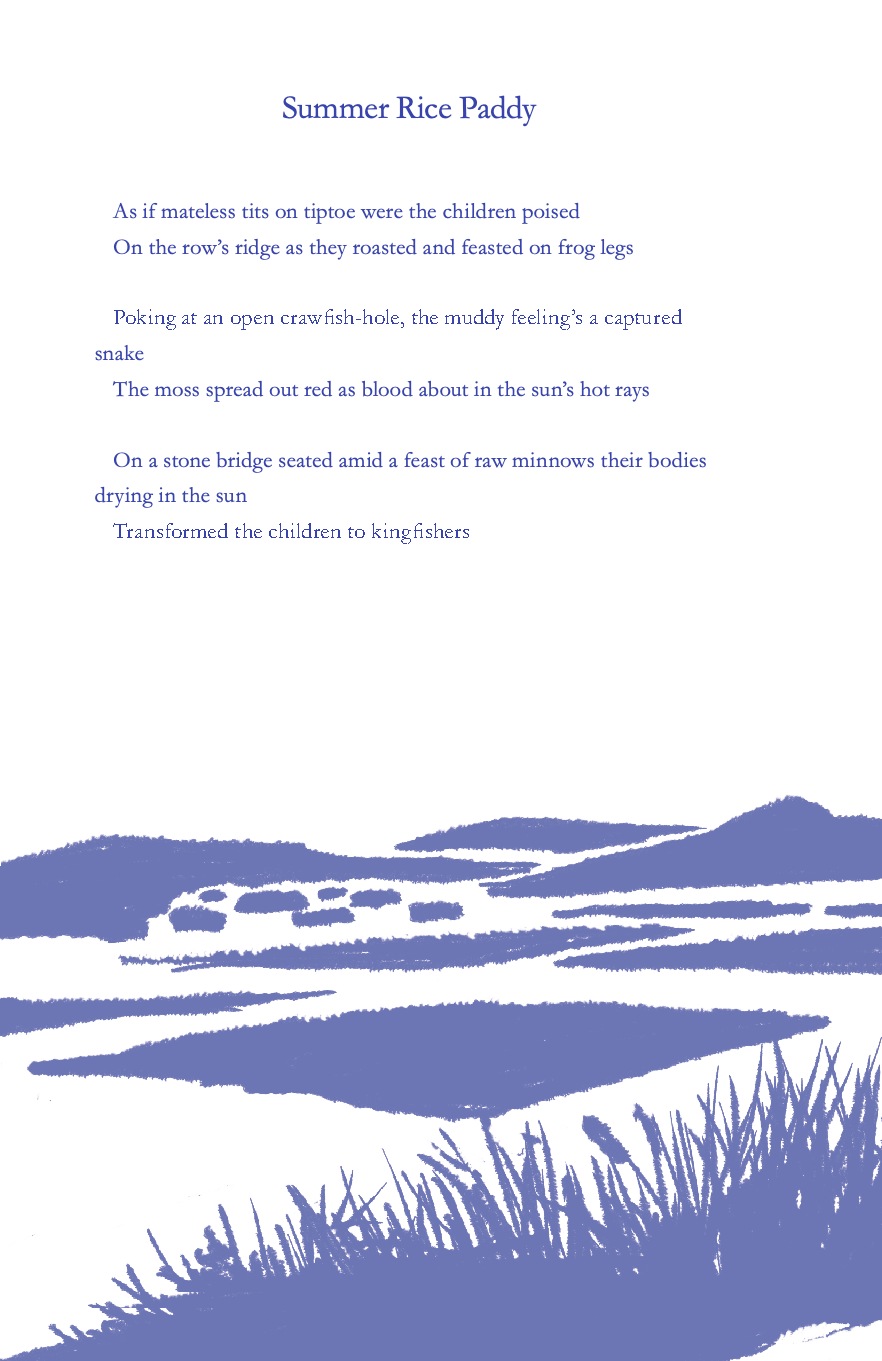
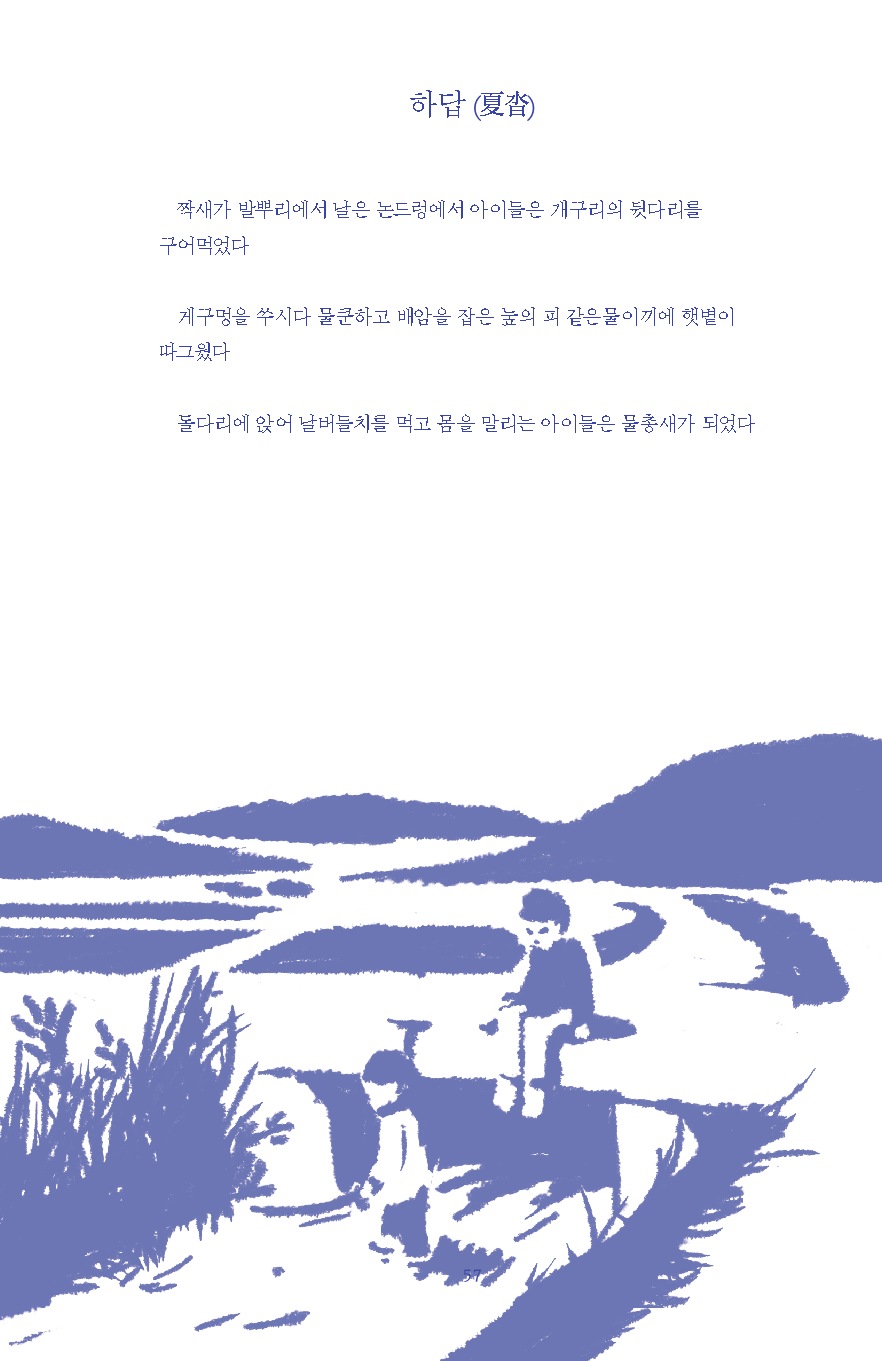
Each stanza brings the children closer to the animals around them. They eat, poke into a hole, catch and dry themselves in the sun. The poem’s quick movements allow the countryside to be encountered through bodies and actions.
A landscape that can surprise
The crawfish-hole offers something the children may not expect: a snake. The tactile moment interrupts any distant, picturesque view of the paddy. Mud, heat and the red comparison around the moss keep this a place that can be felt.
The final transformation
The last line turns the children into kingfishers. It does not pause to explain the likeness. Read it beside the opening bird image and ask what has changed between the children watching, eating and becoming part of this scene.
Sources & credits
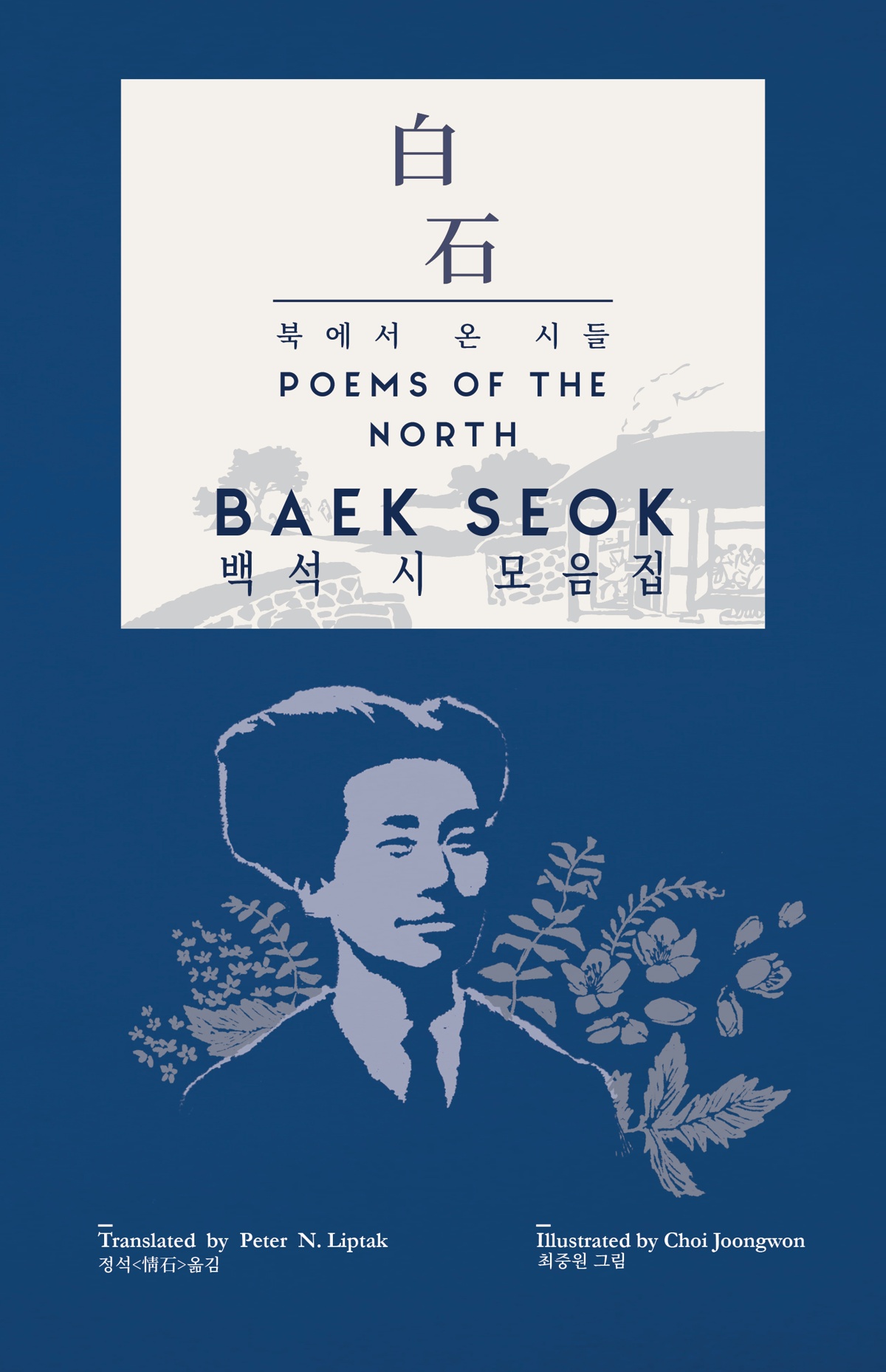
Poems by Baek Seok. English translation by Peter N. Liptak. Korean reading by Hojae Kim. Artwork in the printed spreads by Choi Joongwon.
Text: Baek Seok: Poems of the North (Exile Press, 2018), pp. 56–57. Context draws on the edition’s “About the Author” (pp. 6–9), “The Palatal Poems of Baek Seok” and introduction (pp. 14–18), and chronology (pp. 316–323), alongside Liptak’s earlier research manuscript, The Palatal Poems of Baek Suk.
The reading notes are new editorial commentary based on those sources. They are not additional quotations from Liptak or a revision of his translation.
Explore Baek Seok’s life →