The speaker drinks alone, thinks of Natasha, and imagines a valley where they could live. Snow keeps falling through the distance between that room and that wish.
Poem by Baek Seok · English translation by Peter N. Liptak Published edition, pp. 160–161
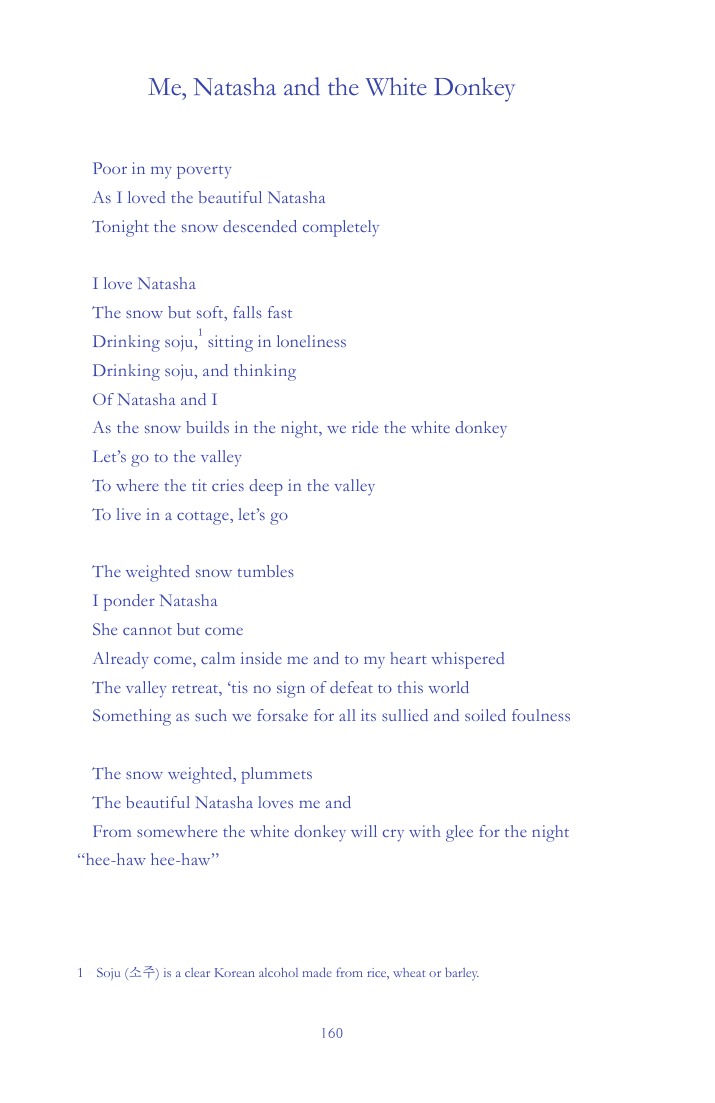
Poor in my poverty
As I loved the beautiful Natasha
Tonight the snow descended completely
I love Natasha
The snow but soft, falls fast
Drinking soju1, sitting in loneliness
Drinking soju, and thinking
Of Natasha and I
As the snow builds in the night, we ride the white donkey
Let’s go to the valley
To where the tit cries deep in the valley
To live in a cottage, let’s go
The weighted snow tumbles
I ponder Natasha
She cannot but come
Already come, calm inside me and to my heart whispered
The valley retreat, ‘tis no sign of defeat to this world
Something as such we forsake for all its sullied and soiled foulness
The snow weighted, plummets
The beautiful Natasha loves me and
From somewhere the white donkey will cry with glee for the night
“hee-haw hee-haw”
1 Soju (소주) is a clear Korean alcohol made from rice, wheat or barley. Published note, p. 160.
한국어
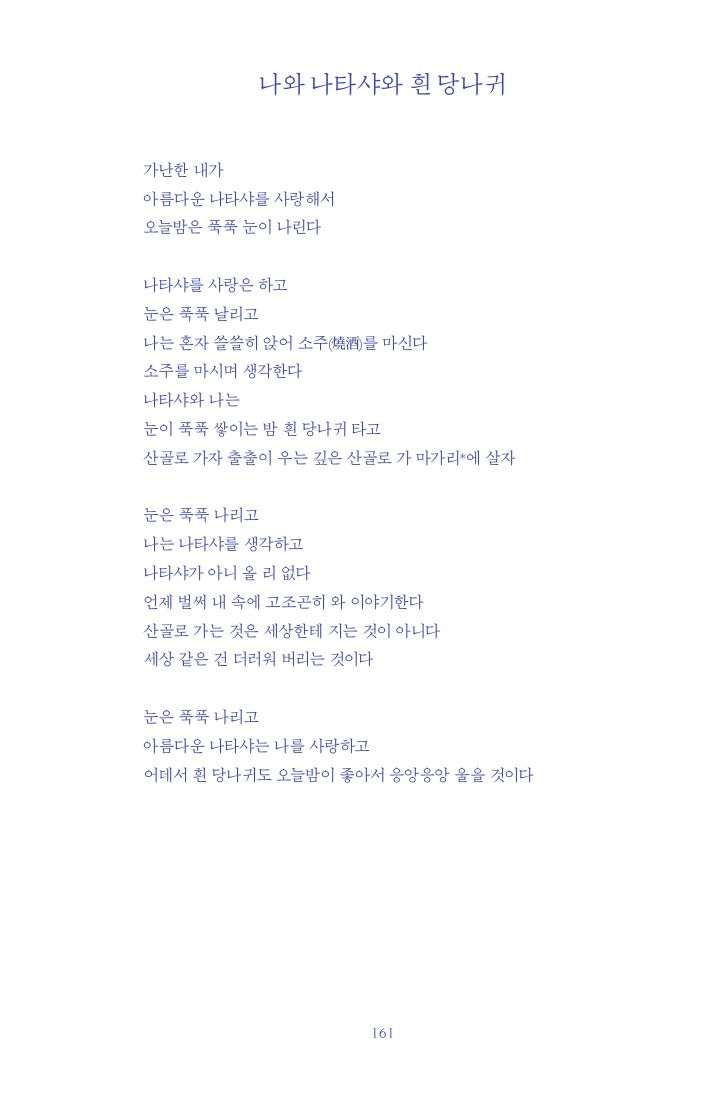
가난한 내가
아름다운 나타샤를 사랑해서
오늘밤은 푹푹 눈이 나린다
나타샤를 사랑은 하고
눈은 푹푹 날리고
나는 혼자 쓸쓸히 앉어 소주(燒酒)를 마신다
소주를 마시며 생각한다
나타샤와 나는
눈이 푹푹 쌓이는 밤 흰 당나귀 타고
산골로 가자 출출이 우는 깊은 산골로 가 마가리*에 살자
눈은 푹푹 나리고
나는 나타샤를 생각하고
나타샤가 아니 올 리 없다
언제 벌써 내 속에 고조곤히 와 이야기한다
산골로 가는 것은 세상한테 지는 것이 아니다
세상 같은 건 더러워 버리는 것이다
눈은 푹푹 나리고
아름다운 나타샤는 나를 사랑하고
어데서 흰 당나귀도 오늘밤이 좋아서 응앙응앙 울을 것이다
Wording, punctuation and stanza divisions follow the published pages. Line wrapping adapts to your screen.
Hear the original
Listen to the Korean.
Korean reading by Hojae Kim. Follow the Korean text, then return to the English.
See the original illustrated pages
Original page reproductions. Select a page to enlarge it.
What happens—and what is imagined
The poem begins in poverty and love. In its second stanza, the speaker is alone with soju and begins thinking of a journey with Natasha. Later, she is already within him, speaking to his heart. These movements matter: the poem does not simply narrate a couple leaving together. It lets imagined companionship enter a solitary room.
The snow keeps returning
Snow appears in every stanza, but the published English gives it changing weight and motion: it descends, falls, tumbles and plummets. Listen to the returning 푹푹 in the Korean recording. The repeated weather holds the poem together while the speaker moves from his immediate circumstances into the imagined valley.
The valley and the world
The imagined retreat becomes a declaration about refusing a sullied world. Whether that feels defiant, consoling or fragile is a question to carry back into the poem. Liptak’s introduction describes Baek Seok’s longing for freedom in a remembered Korean world; the valley offers a particular place to consider that reading, without reducing the poem to a historical slogan.
Natasha and the life behind the poem
The book’s chronology records Baek Seok’s relationship with Kim Jin-hyang, known as Jaya, during the 1930s. That biography belongs beside the poem, but does not establish that Natasha is simply a documentary portrait of her. The poem’s speaker, the historical poet and the named woman should not be collapsed into one factual story. Read the life page for the chronology, and return here for the poem’s own imagined world.
Sources & credits
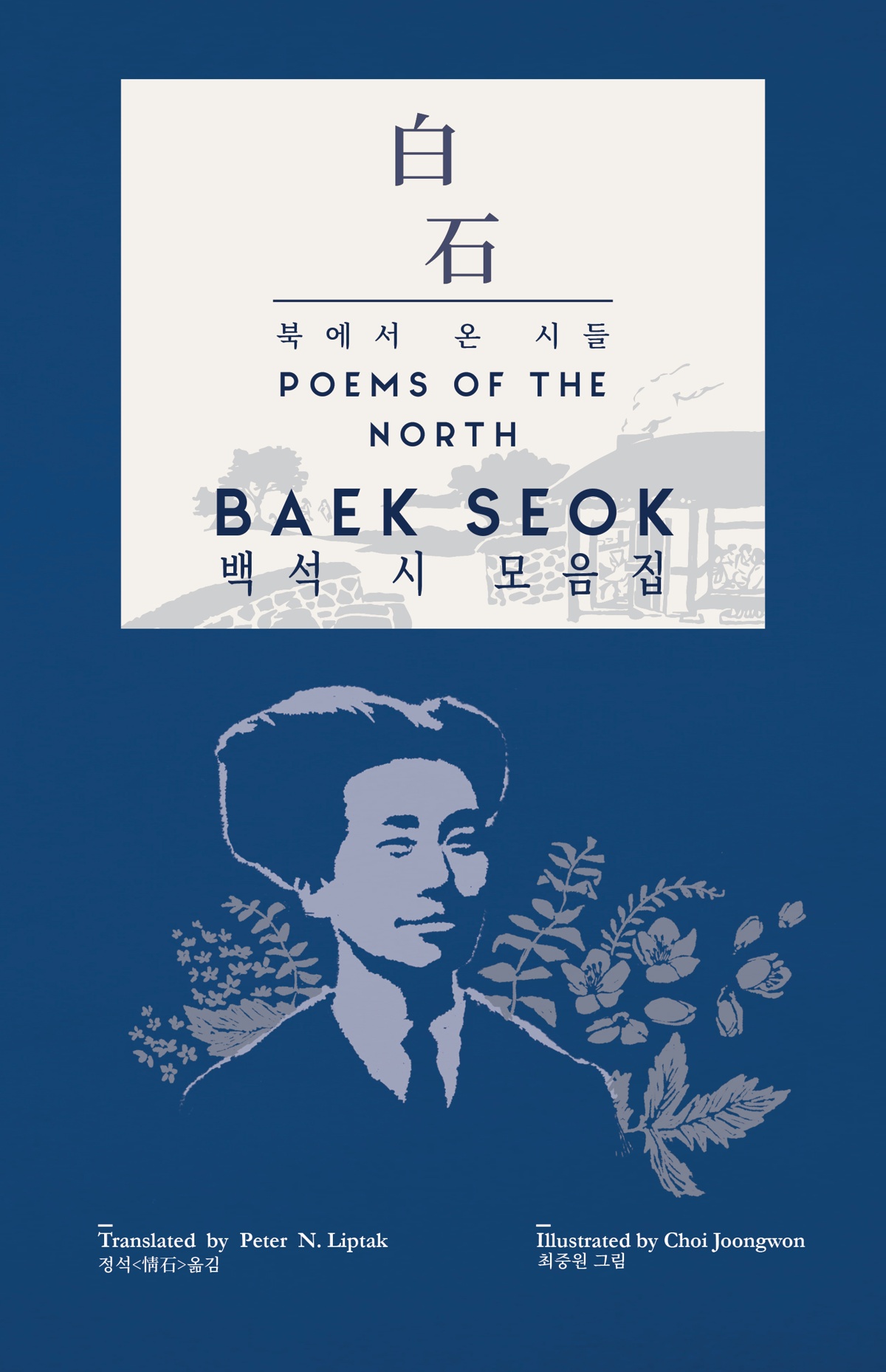
Poems by Baek Seok. English translation by Peter N. Liptak. Korean reading by Hojae Kim. Artwork in the printed spreads by Choi Joongwon.
Text: Baek Seok: Poems of the North (Exile Press, 2018), pp. 160–161. Context draws on the edition’s “About the Author” (pp. 6–9), “The Palatal Poems of Baek Seok” and introduction (pp. 14–18), and chronology (pp. 316–323), alongside Liptak’s earlier research manuscript, The Palatal Poems of Baek Suk.
The reading notes are new editorial commentary based on those sources. They are not additional quotations from Liptak or a revision of his translation.