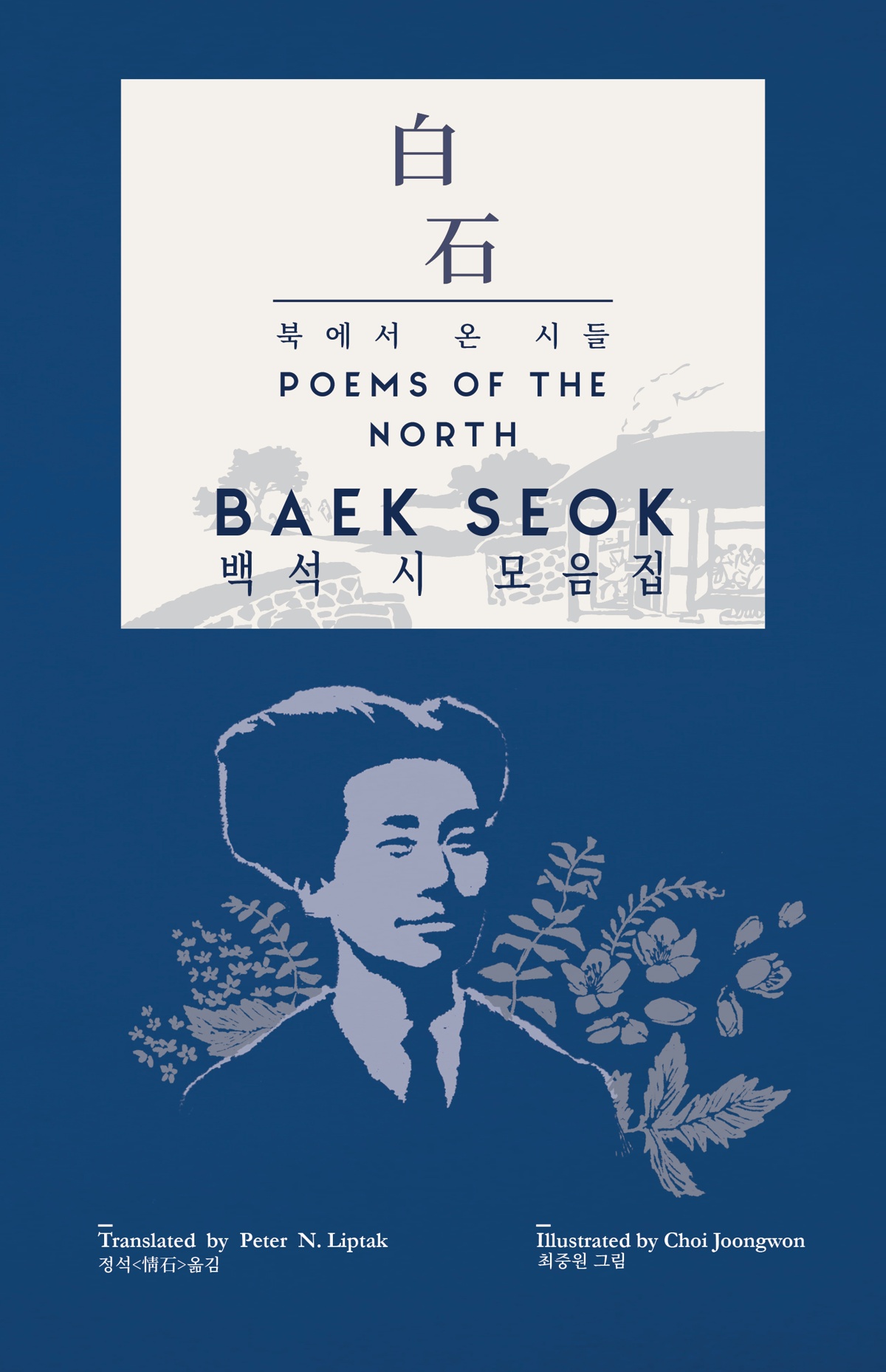
Baek Seok · Poems of the North / Read & listen

Duck Pony Hare

오리 망아지 토끼

The countryside, at a child’s height.

A father goes about his work. A child wants him back, wants the pony, wants to catch a hare. The animals belong to the child’s wishes as much as to the landscape.

Poem by Baek Seok · English translation by Peter N. Liptak
Published edition, pp. 50–51

The published text

English

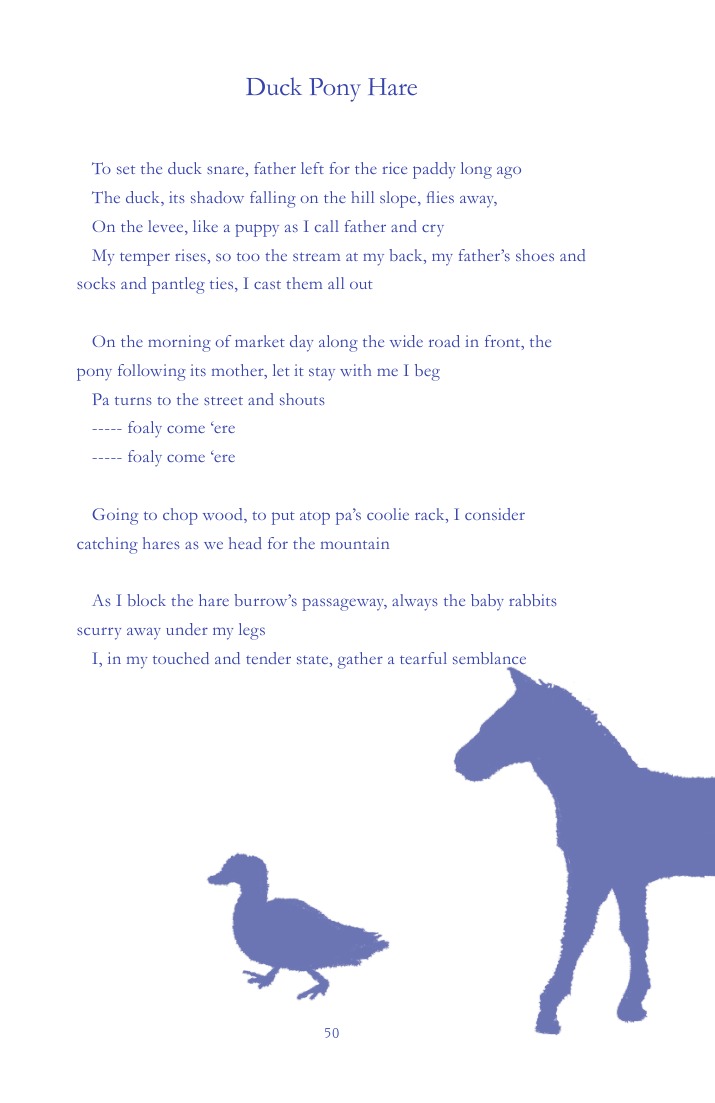
To set the duck snare, father left for the rice paddy long ago The duck, its shadow falling on the hill slope, flies away, On the levee, like a puppy as I call father and cry My temper rises, so too the stream at my back, my father’s shoes and socks and pantleg ties, I cast them all out

On the morning of market day along the wide road in front, the pony following its mother, let it stay with me I beg Pa turns to the street and shouts ----- foaly come ‘ere ----- foaly come ‘ere

Going to chop wood, to put atop pa’s coolie rack, I consider catching hares as we head for the mountain

As I block the hare burrow’s passageway, always the baby rabbits scurry away under my legs I, in my touched and tender state, gather a tearful semblance
한국어

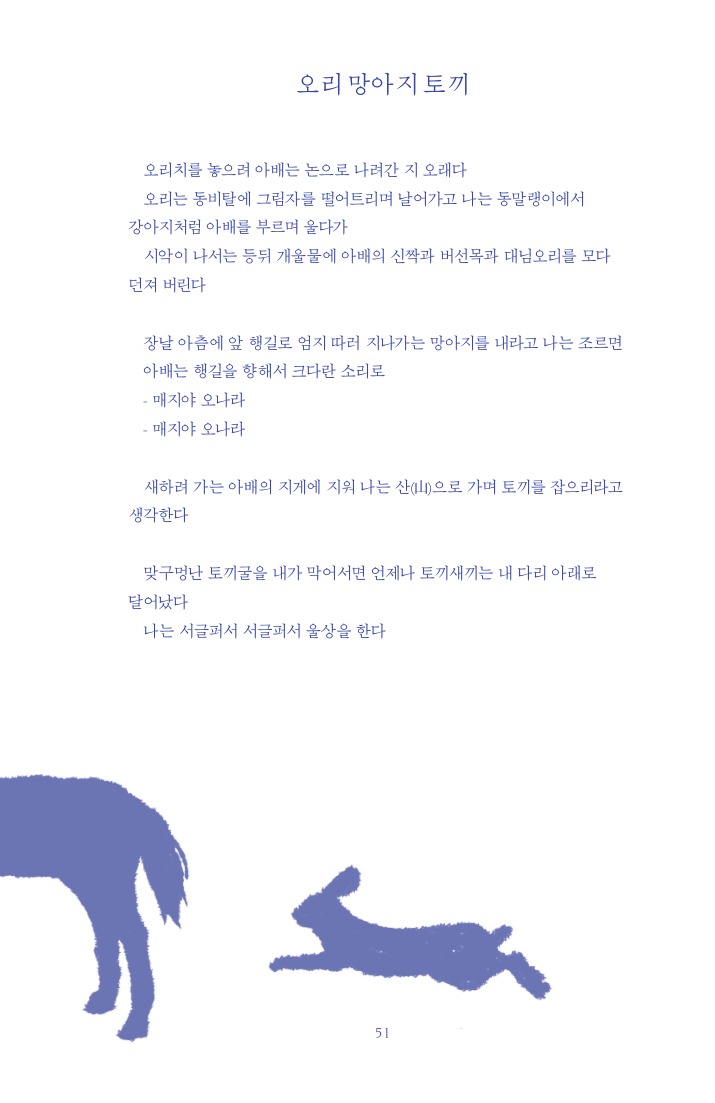
오리치를 놓으려 아배는 논으로 나려간 지 오래다 오리는 동비탈에 그림자를 떨어트리며 날어가고 나는 동말랭이에서 강아지처럼 아배를 부르며 울다가 시악이 나서는 등뒤 개울물에 아배의 신짝과 버선목과 대님오리를 모다 던져 버린다

장날 아츰에 앞 행길로 엄지 따러 지나가는 망아지를 내라고 나는 조르면 아배는 행길을 향해서 크다란 소리로 - 매지야 오나라 - 매지야 오나라

새하려 가는 아배의 지게에 지워 나는 산(山)으로 가며 토끼를 잡으리라고 생각한다

맞구멍난 토끼굴을 내가 막어서면 언제나 토끼새끼는 내 다리 아래로 달어났다 나는 서글퍼서 서글퍼서 울상을 한다

Wording, punctuation and stanza divisions follow the published pages. Line wrapping adapts to your screen.

Hear the original

Listen to the Korean.

Korean reading by Hojae Kim. Follow the Korean text, then return to the English.

See the original illustrated pages
Published English translation, page 50, of Duck Pony HarePublished Korean original, page 51, of Duck Pony Hare

Original page reproductions. Select a page to enlarge it.

Four moments with a father

The poem moves through four stanzas: waiting for father at the rice paddy, pleading for a pony on market morning, planning to catch hares on the way to the mountain, and failing at the burrow. The changes of scene keep the father’s daily work beside the child’s urgent desires. The final sadness has been gathering through these small disappointments.

The work inside the landscape

A rice paddy, a levee, market day, woodcutting and a carrying rack give the poem its setting. They also tell us what the adults are doing while the child watches, asks and imagines. Liptak’s “The Palatal Poems of Baek Seok” describes a poetry rooted in local customs and the objects around ordinary people; here, that world is seen through a child’s dependence on an adult.

Father, Pa, 아배

The published English moves from “father” to “Pa”; the Korean repeatedly gives us 아배. That intimate address matters alongside the animals’ names. Listen for the father’s repeated call to the pony, then for the repetition in the child’s closing Korean line. The voices make the relationship audible without an explanation from an adult narrator.

Tenderness without a lesson

The child’s anger sends father’s things into the stream; later, the rabbits slip away. The poem allows frustration, mischief and tenderness to remain together. A useful question for a shared reading is how the father’s call changes the mood, even though it does not give the child the animal.

Sources & credits

Poems by Baek Seok. English translation by Peter N. Liptak. Korean reading by Hojae Kim. Artwork in the printed spreads by Choi Joongwon.

Text: Baek Seok: Poems of the North (Exile Press, 2018), pp. 50–51. Context draws on the edition’s “About the Author” (pp. 6–9), “The Palatal Poems of Baek Seok” and introduction (pp. 14–18), and chronology (pp. 316–323), alongside Liptak’s earlier research manuscript, The Palatal Poems of Baek Suk.

The reading notes are new editorial commentary based on those sources. They are not additional quotations from Liptak or a revision of his translation.

Explore Baek Seok’s life →
Complete front cover of Baek Seok: Poems of the North

The complete edition

Keep reading.
In both languages.

324-page illustrated hardcover. Korean originals and English translations by Peter N. Liptak, with artwork by Choi Joongwon.

Buy the hardcover · $28.95 ↗

Order directly from Exile Press on Shopify. Shipping and applicable tax shown at checkout.