Illustrated bilingual hardcover · 백석 시 모음집
Baek Seok:
Poems of the North
A whole world. In a few lines.
Food, snow, village life and longing. Baek Seok’s poems open a world through everyday things. This illustrated hardcover brings the Korean originals and Peter N. Liptak’s English translations together on facing pages.
324 pages · Korean & English · Illustrated hardcover
Order directly from Exile Press on Shopify.
Fulfilled by Pathway Book. Shipping and applicable tax shown at checkout.
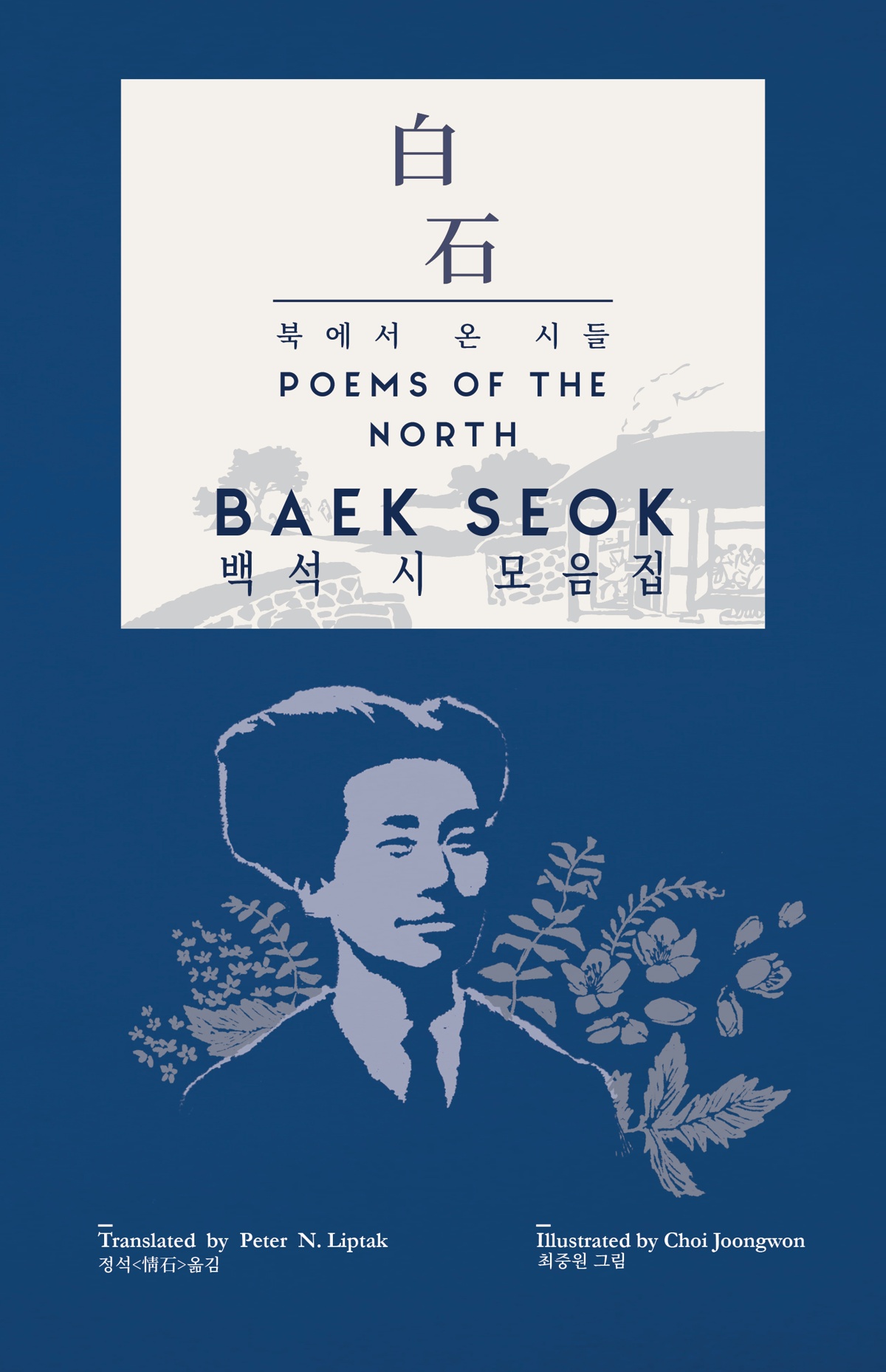
View the complete cover ↗
Begin here · Green Persimmon
A north wind.
A sudden sound.
Read it once. Then listen to the Korean and come back to the English.
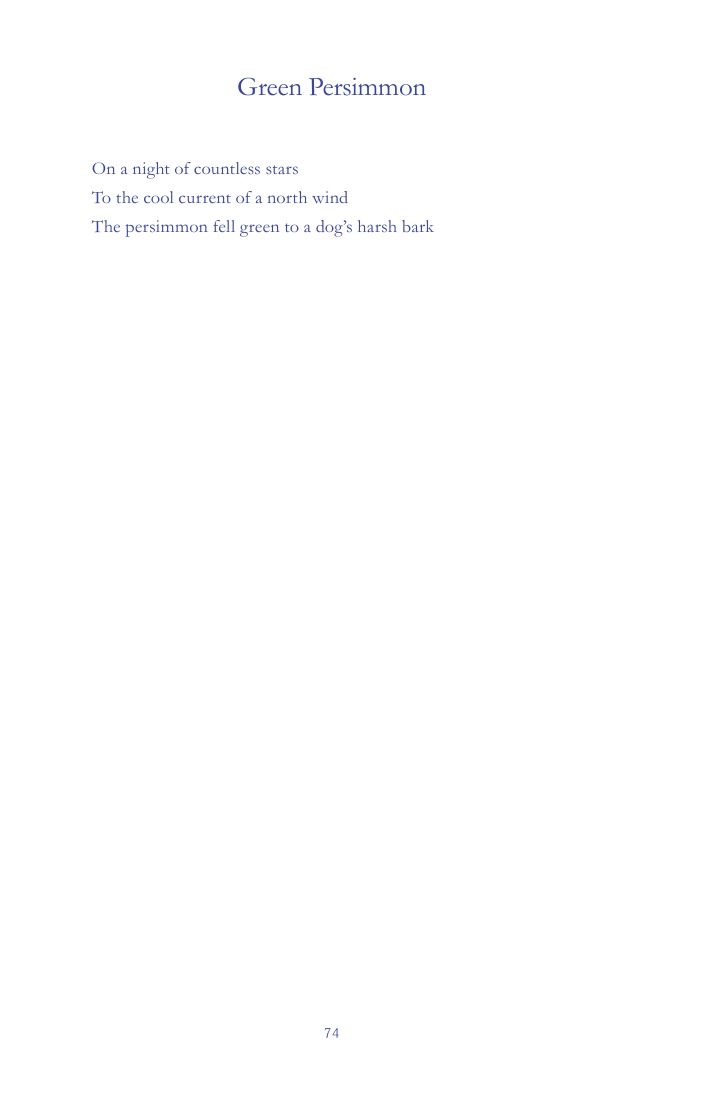
Read the facing pages →On a night of countless stars
To the cool current of a north wind
The persimmon fell green to a dog’s harsh bark
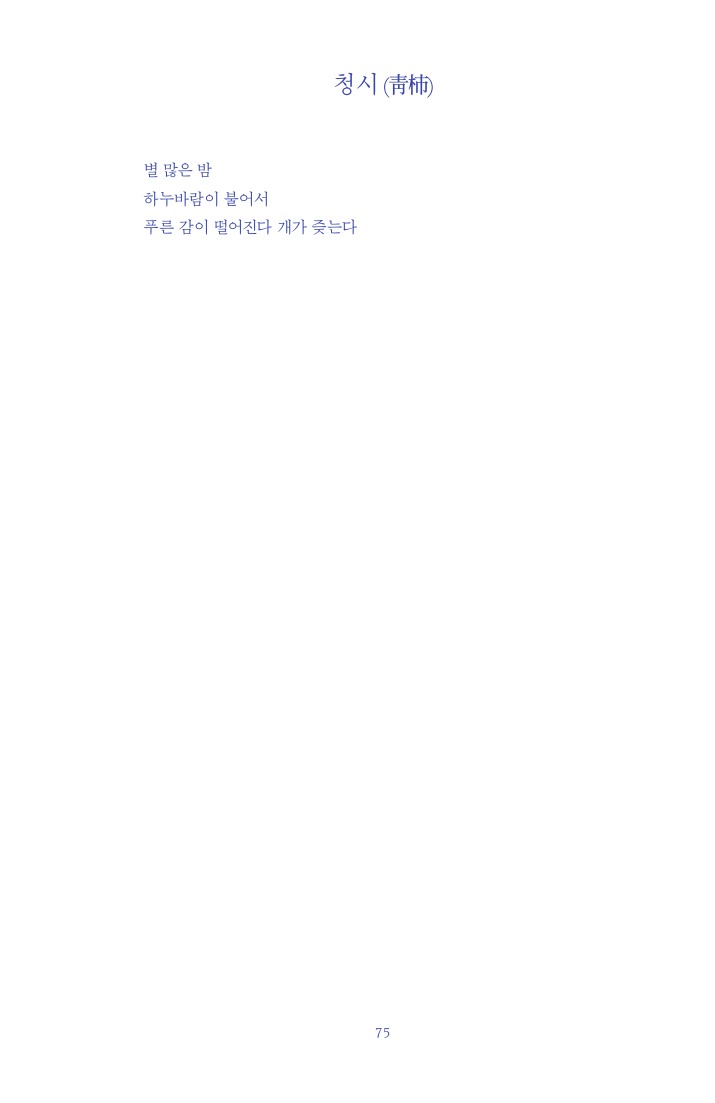
별 많은 밤
하누바람이 불어서
푸른 감이 떨어진다 개가 즞는다
The reading room
Three ways into the poems.
Night sounds. Childhood animals. Snow and longing. Choose a poem to see its original facing pages and hear a Korean reading.
Green Persimmon
청시 (靑枾)
A very short poem with room for a whole night. What changes when you hear the last sound?
The printed pages provide the Korean text and English translation. Select a page to read it larger.
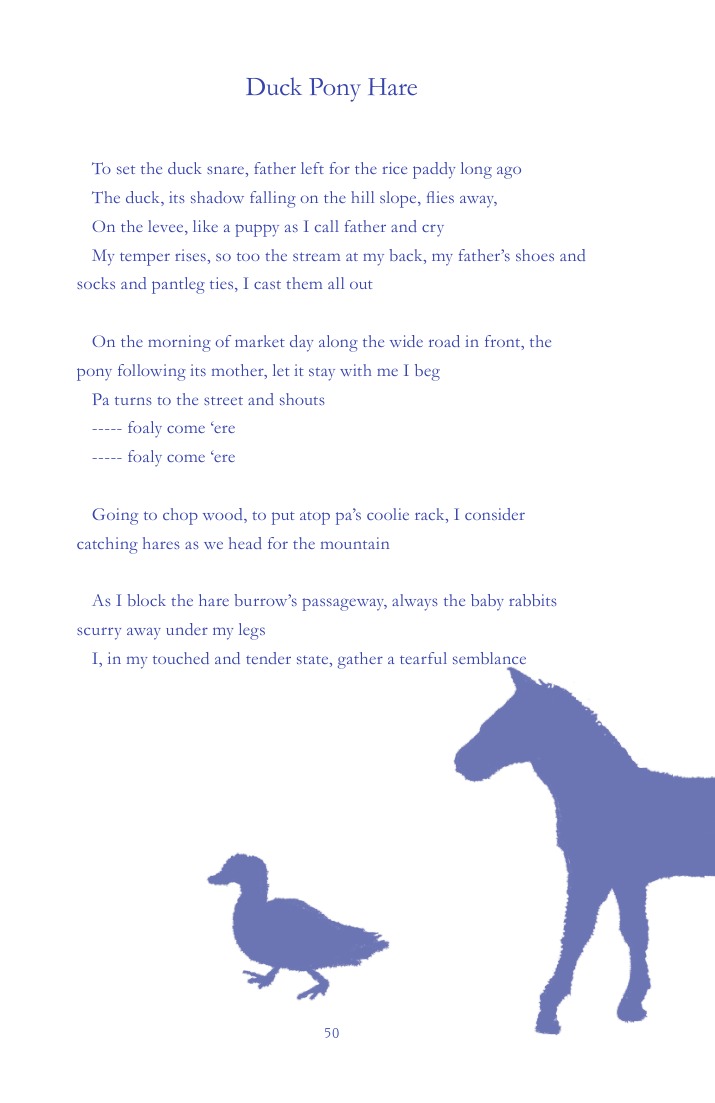
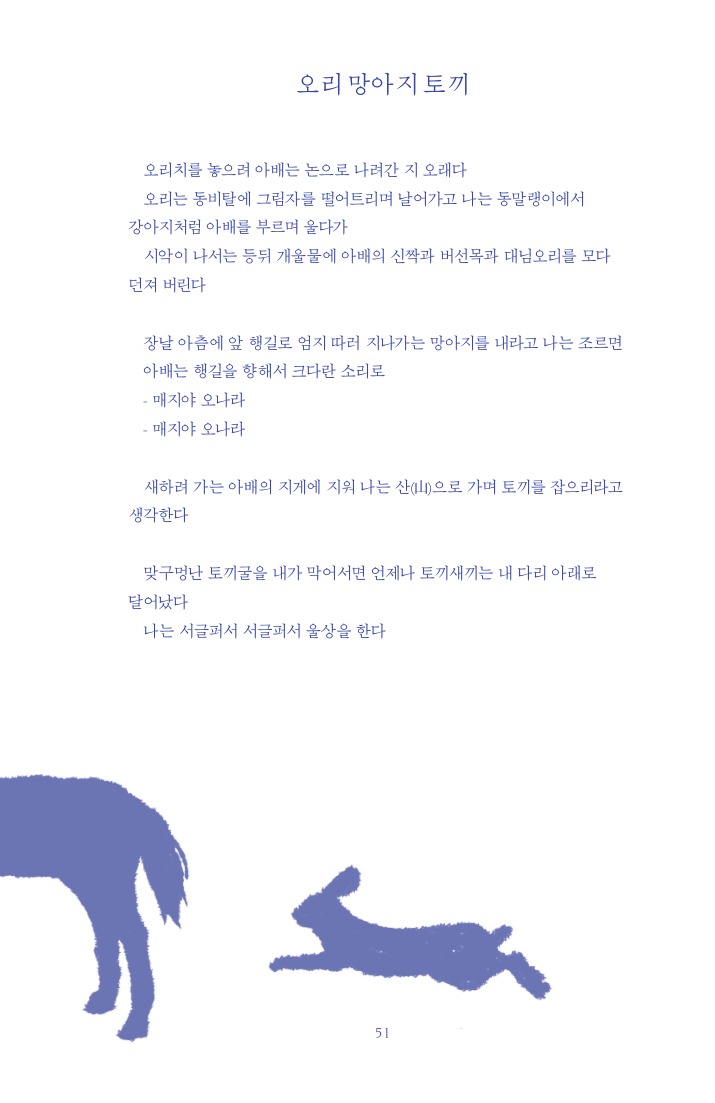
Duck Pony Hare
오리 망아지 토끼
A child follows his father into a world of ducks, a pony and elusive hares. Watch the feeling shift as the animals get away.
Published pages 50–51. Select a page to read it larger.
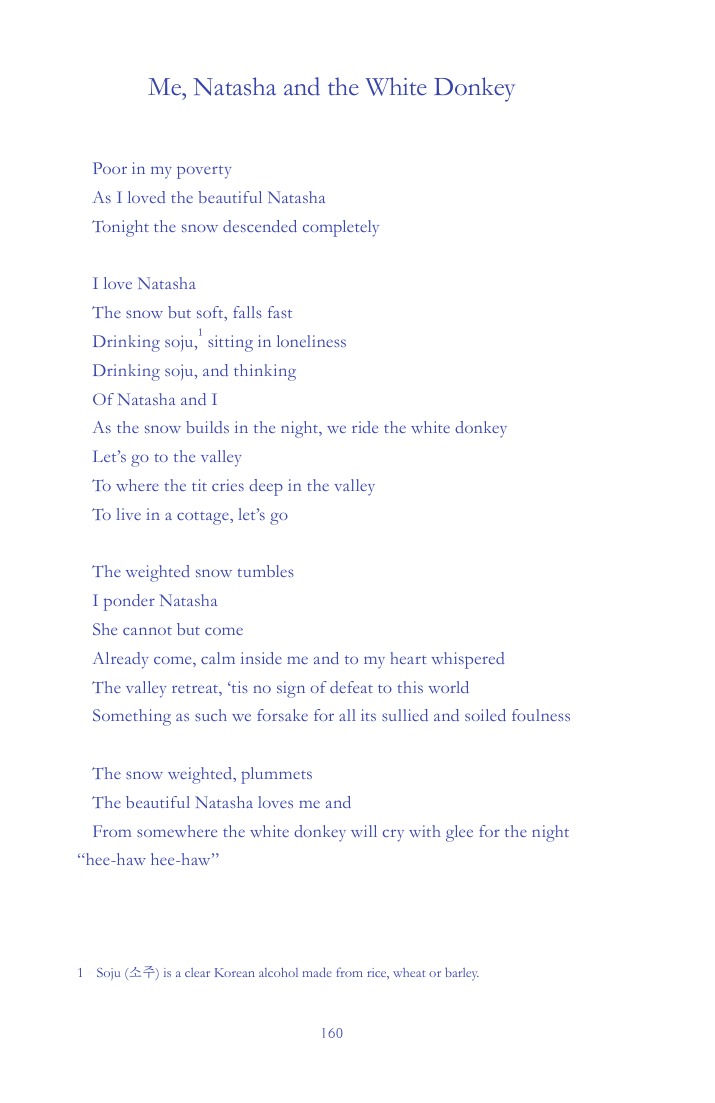
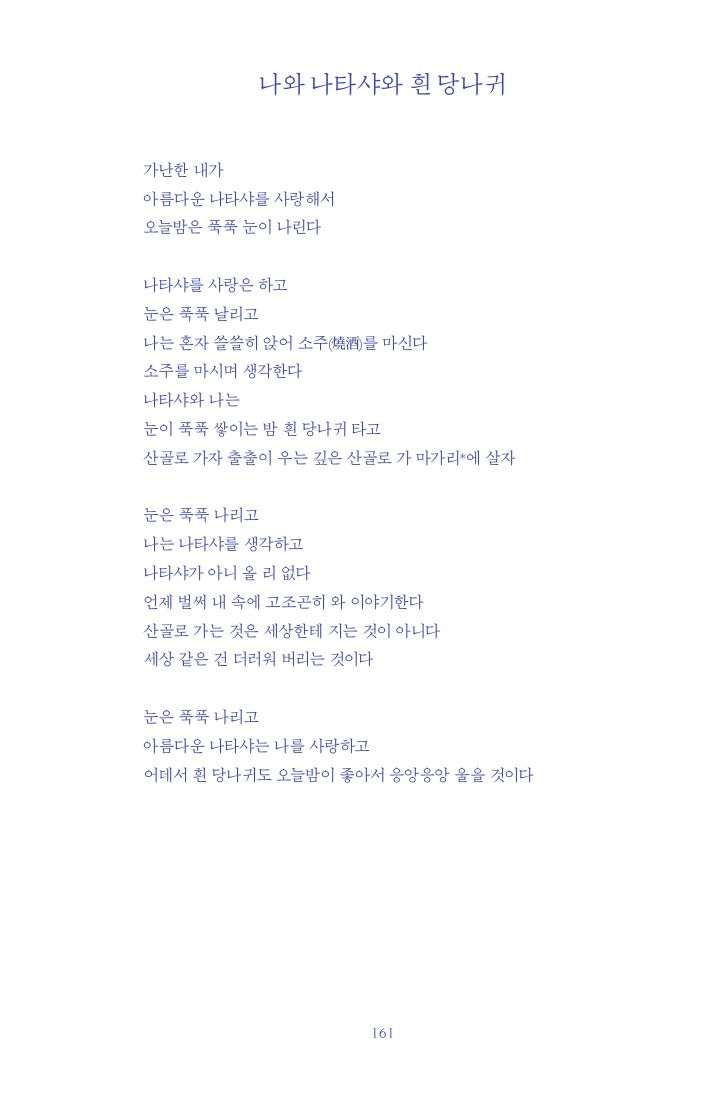
Me, Natasha and the White Donkey
나와 나타샤와 흰 당나귀
Snow, soju and an imagined journey into the mountains. A private longing becomes a place to live.
Published pages 160–161. Select a page to read it larger.
The design · Art by Choi Joongwon
A poem has
a place on the page.
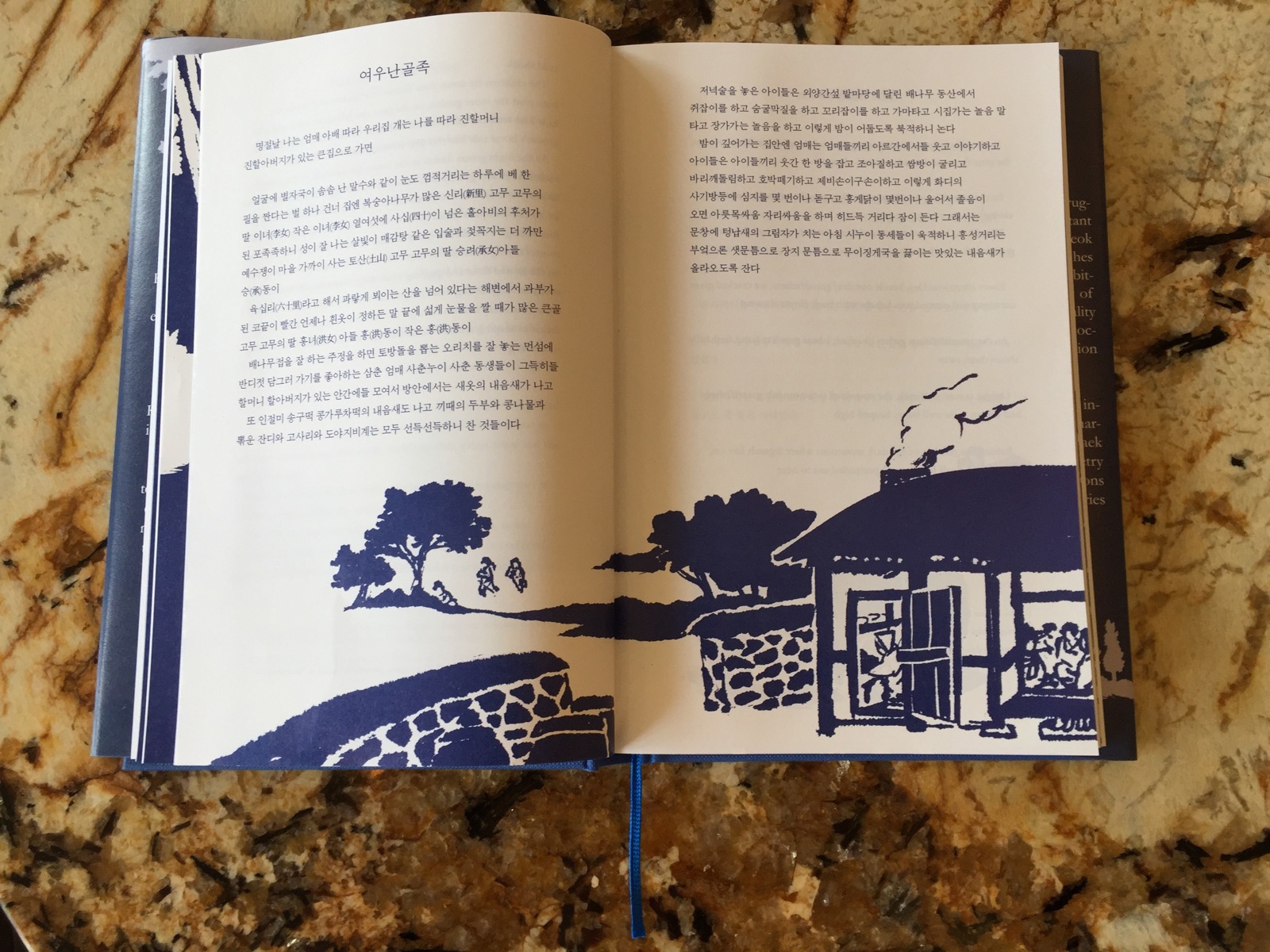
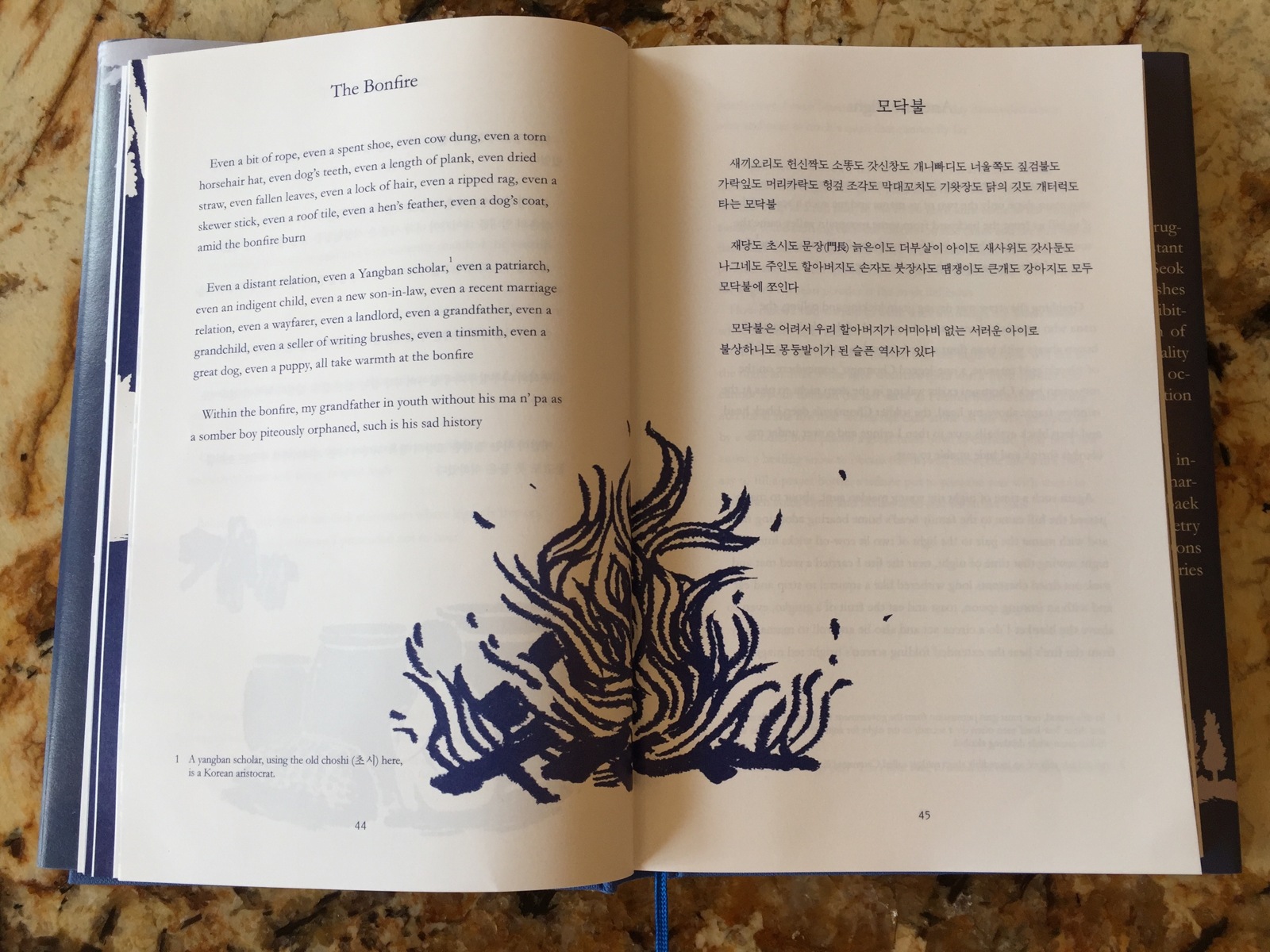
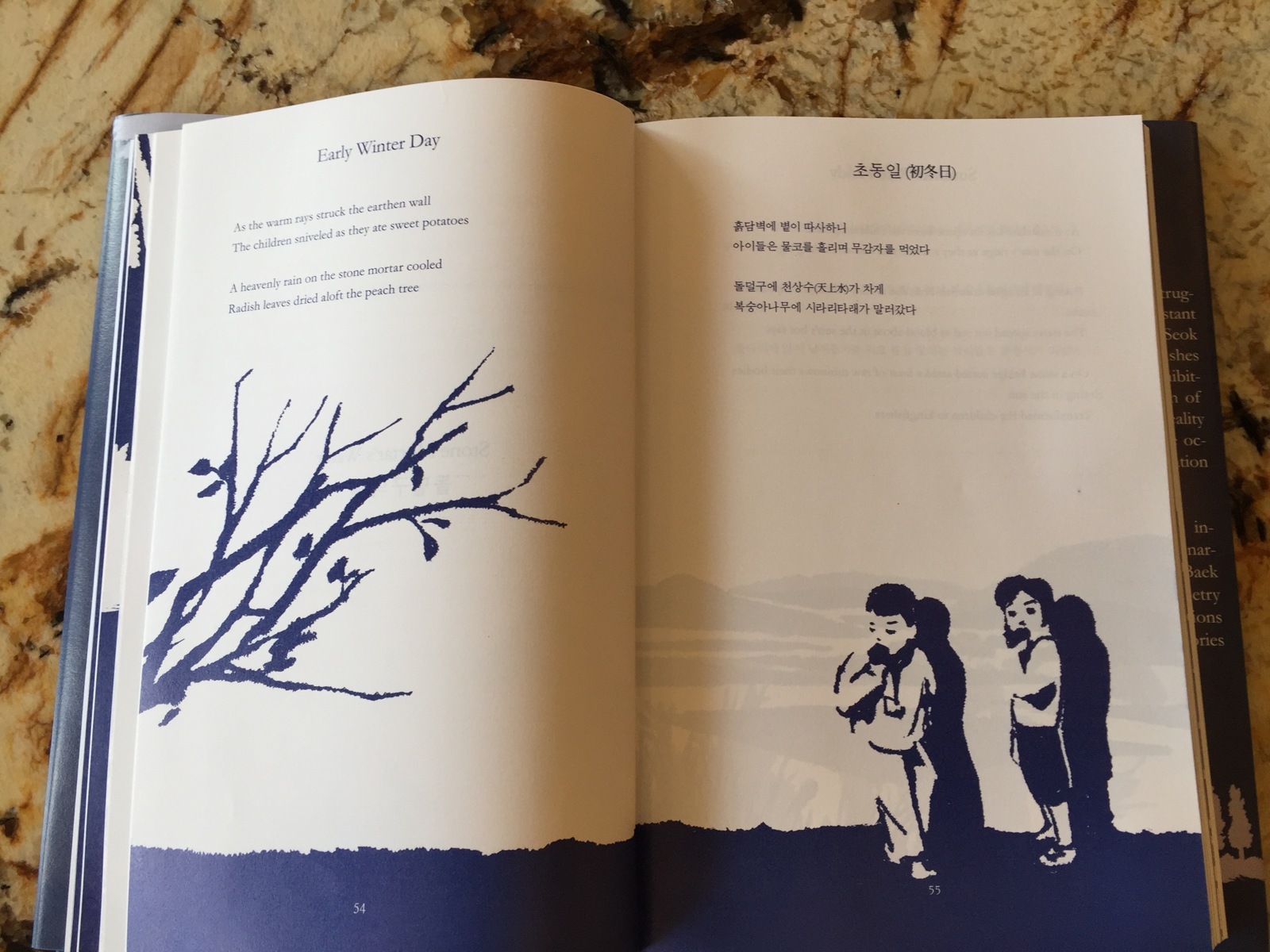
Animals, a village gate, a bowl, a stand of trees. Choi Joongwon’s blue illustrations share the pages with the things Baek Seok notices.
The original Korean faces the English translation. Space around the lines lets the shorter poems breathe; notes help with an unfamiliar word or place. The cover’s portrait and botanical forms carry that blue world into the book’s exterior.
Reviews & reader responses
Others have spent time here.
“It’s hard to imagine a better introduction to Baek Seok’s work.”
Read the review ↗
“Simple celebrations of traditional rural life, tastes, smells, sounds of the countryside dominate the poems of this romantic, solitary figure.”
Endorsement reproduced in the published edition
“The unique temporal exoticism characterizing the early phase of Baek Seok’s poetry is exquisitely caught in this version.”
Endorsement reproduced in the published edition
“arranged beautifully, with the English translation preceding the Korean”
From the review of Poems of the North
Award
2018 Foreword INDIES
Silver winner
Multicultural (Adult Fiction), in the Foreword INDIES Book of the Year Awards.
See the award record ↗Translation & publication support
Literature Translation
Institute of Korea
The published edition acknowledges LTI Korea’s support. The project’s existing site records a 2014 translation and publication grant.
About the author
Baek Seok
백석 · 1912–1996
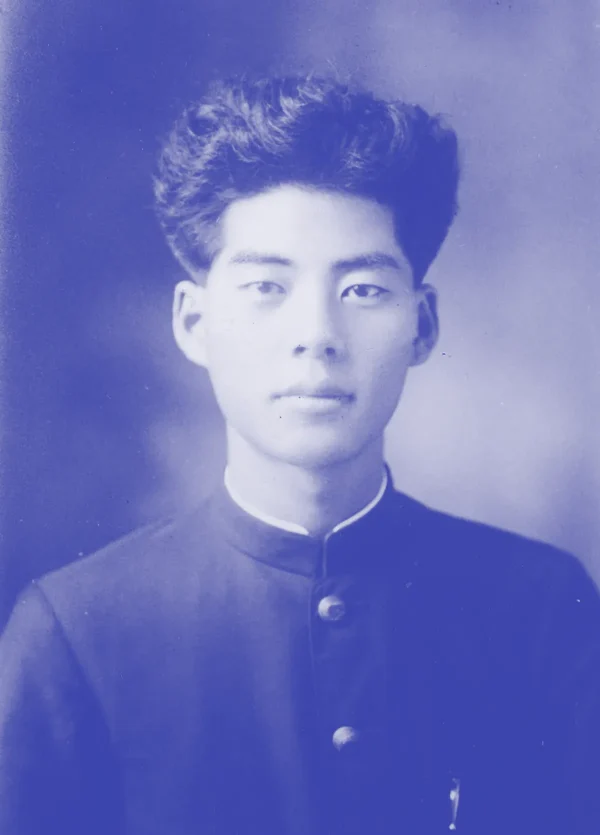
Born Baek Gi-haeng in 1912, Baek Seok made the language of daily life a central material of his poetry. His poems return to food, animals, family, village customs and northern landscapes, giving familiar things an extraordinary density of feeling.
He wrote during Japanese colonial rule and remained in the North after Korea’s division. His literary life later included translation and writing for children. His work was long restricted in South Korea before reaching a new readership there in the late 1980s.
This edition approaches him through the poems themselves, with an introduction, a biographical timeline and the Korean originals beside the English.
The translator’s story
Fifteen years
following the words.
“When I was first exposed to Baek Seok, I felt an immediate connection to him and his words.”
Peter’s account of the project describes a fifteen-year return to the poems: learning their food and objects, following local expressions, and trying to understand the world behind an apparently simple line.
He came to Korea in 1995 and lived and worked there for twenty years. After Korean study at Ewha Woman’s University and Seoul National University, he began graduate study in Korean Studies at Yonsei. It was there that he first encountered Baek Seok’s poetry.
A poet himself, Peter kept returning to a connection he describes through jung (정): an affection or bond that grows over time. Appreciation became a patient process of decoding, research and translation.
Why keep both languages?
The English offers a way into the poems; the Korean keeps the sounds and word choices within reach. The notes supply context without asking every reader to begin with a knowledge of Korean history or dialect. Read in either language, or move between them.
Inside the physical book
A book to leave open.
Blue illustrations move through the poems. Korean and English face each other. The notes give unfamiliar words somewhere to land.
Take a closer look →The complete edition
Baek Seok, in both languages.
324-page illustrated hardcover · $28.95 USD