Baek Seok · Poems of the North / Read & listen

Despair

절망

A beautiful dream meets the weight of a morning.

A woman imagined in the colors of her clothing becomes a woman climbing a steep hill, carrying a jar and leading a child.

Poem by Baek Seok · English translation by Peter N. Liptak
Published edition, pp. 164–165

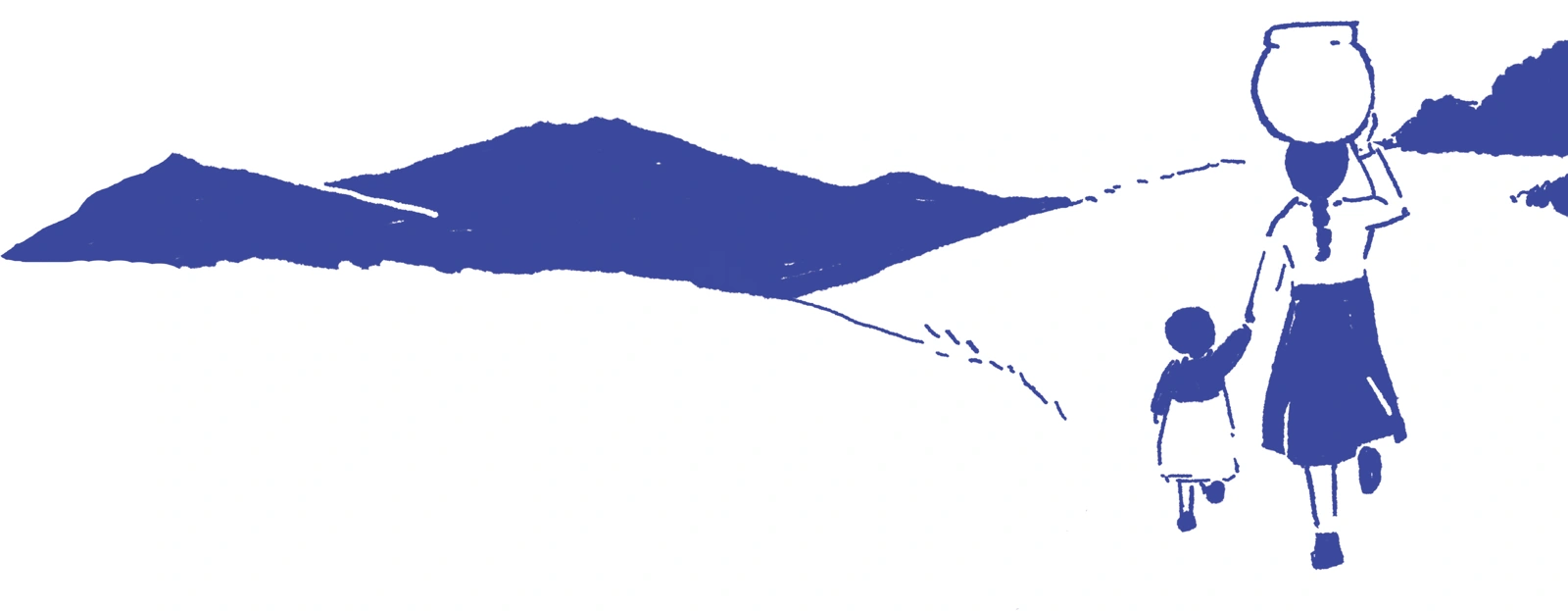
Original illustration from the published pages of Despair
Choi Joongwon · Illustration from pp. 164–165.

The published text

English

The ladies of Bukwan are robust The ladies of Bukwan are fair One especially fair and robust lass Her white jacket, attached with red To harmonize with the black skirt of her hanbok, To think on her was a delightful dream One morning this lass A heavy jar above her brow In her hand some child’s hand to pull A steep hill Huffing as she ascended That day’s entirety turned to sorrow

한국어

북관(北關)에 계집은 튼튼하다 북관(北關)에 계집은 아름답다 아름답고 튼튼한 계집은 있어서 흰 저고리에 붉은 길동을 달어 검정치마에 받쳐입은 것은 나의 꼭 하나 즐거운 꿈이였드니 어늬 아침 계집은 머리에 무거운 동이를 이고 손에 어린것의 손을 끌고 가펴러운 언덕길을 숨이 차서 올라갔다 나는 한종일 서러웠다

Wording, punctuation and stanza divisions follow the published pages. Line wrapping adapts to your screen.

Hear the original

Listen to the Korean.

Korean reading by Hojae Kim. Follow the Korean text, then return to the English.

See the original book pages
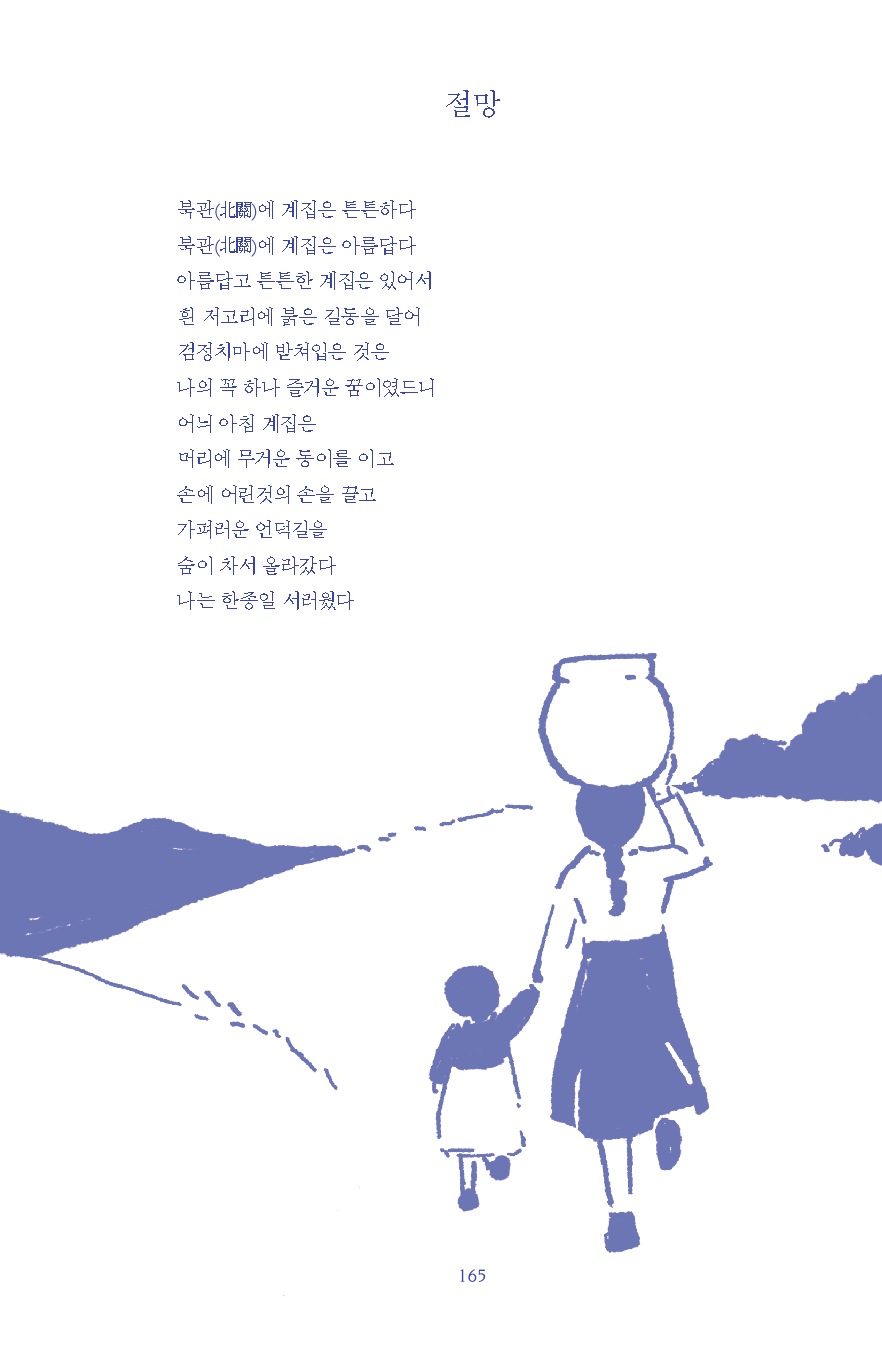
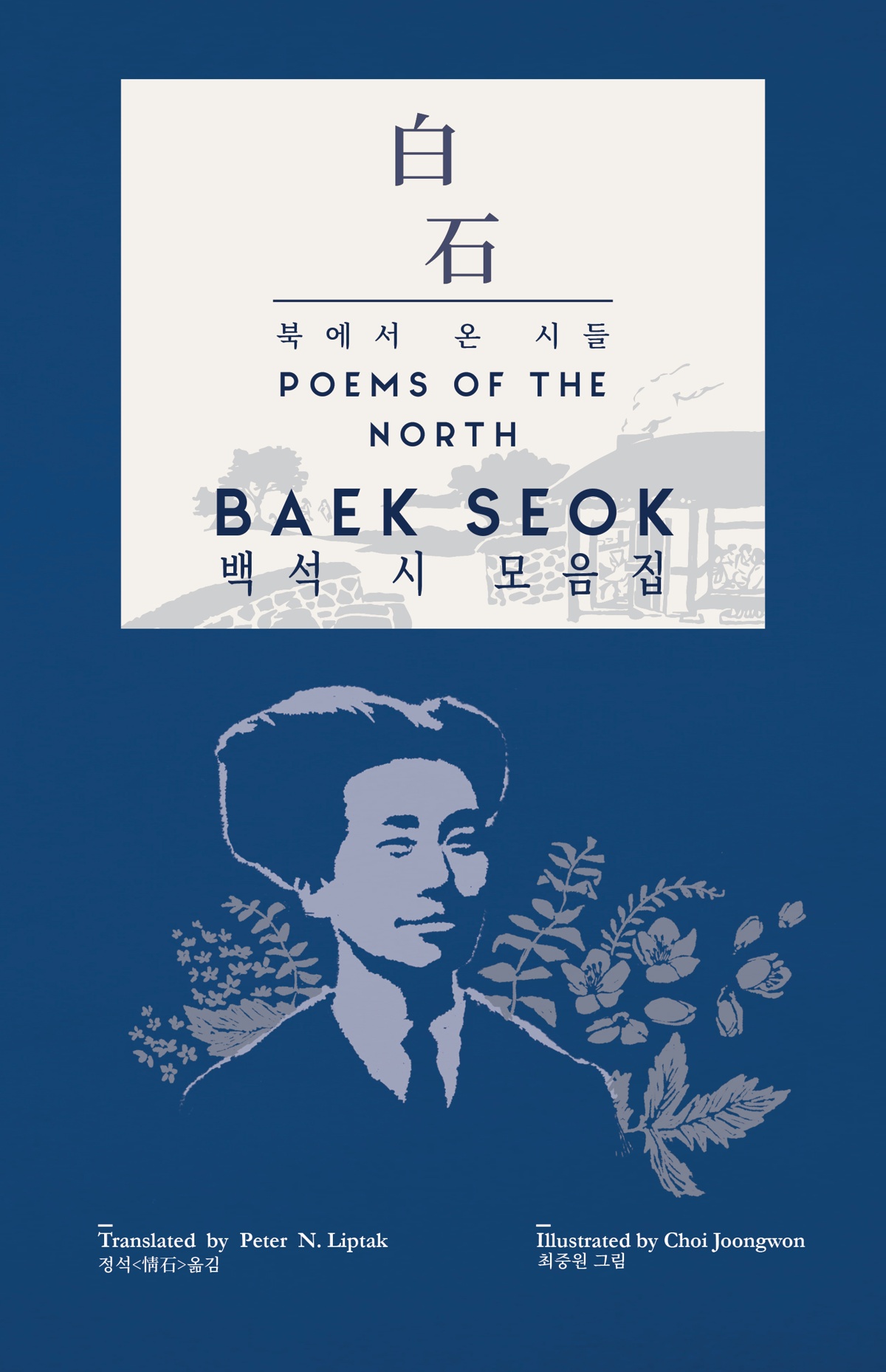
Published English translation, page 164, of DespairPublished Korean original, page 165, of Despair

Original page reproductions. Select a page to enlarge it.

From admiration to attention

The opening praises the women of Bukwan, then settles on one woman. The speaker remembers her clothing as a delightful dream. The second movement changes the scene: weight, effort and a child’s hand replace that imagined stillness.

What the speaker sees

A heavy jar, a steep hill and a breathless ascent are ordinary details with consequences. They interrupt the speaker’s earlier picture of the woman. The poem gives us what he observes and how his day changes; it does not give us her own account of the climb.

Let the title remain a question

The final sorrow lasts the entire day. Is the speaker mourning the loss of his dream, recognizing another person’s burden, or experiencing something less easily separated? Keep those possibilities beside the published words rather than choosing a biography for the woman.

Sources & credits

Poems by Baek Seok. English translation by Peter N. Liptak. Korean reading by Hojae Kim. Artwork in the printed spreads by Choi Joongwon.

Text: Baek Seok: Poems of the North (Exile Press, 2018), pp. 164–165. Context draws on the edition’s “About the Author” (pp. 6–9), “The Palatal Poems of Baek Seok” and introduction (pp. 14–18), and chronology (pp. 316–323), alongside Liptak’s earlier research manuscript, The Palatal Poems of Baek Suk.

The reading notes are new editorial commentary based on those sources. They are not additional quotations from Liptak or a revision of his translation.

Explore Baek Seok’s life →
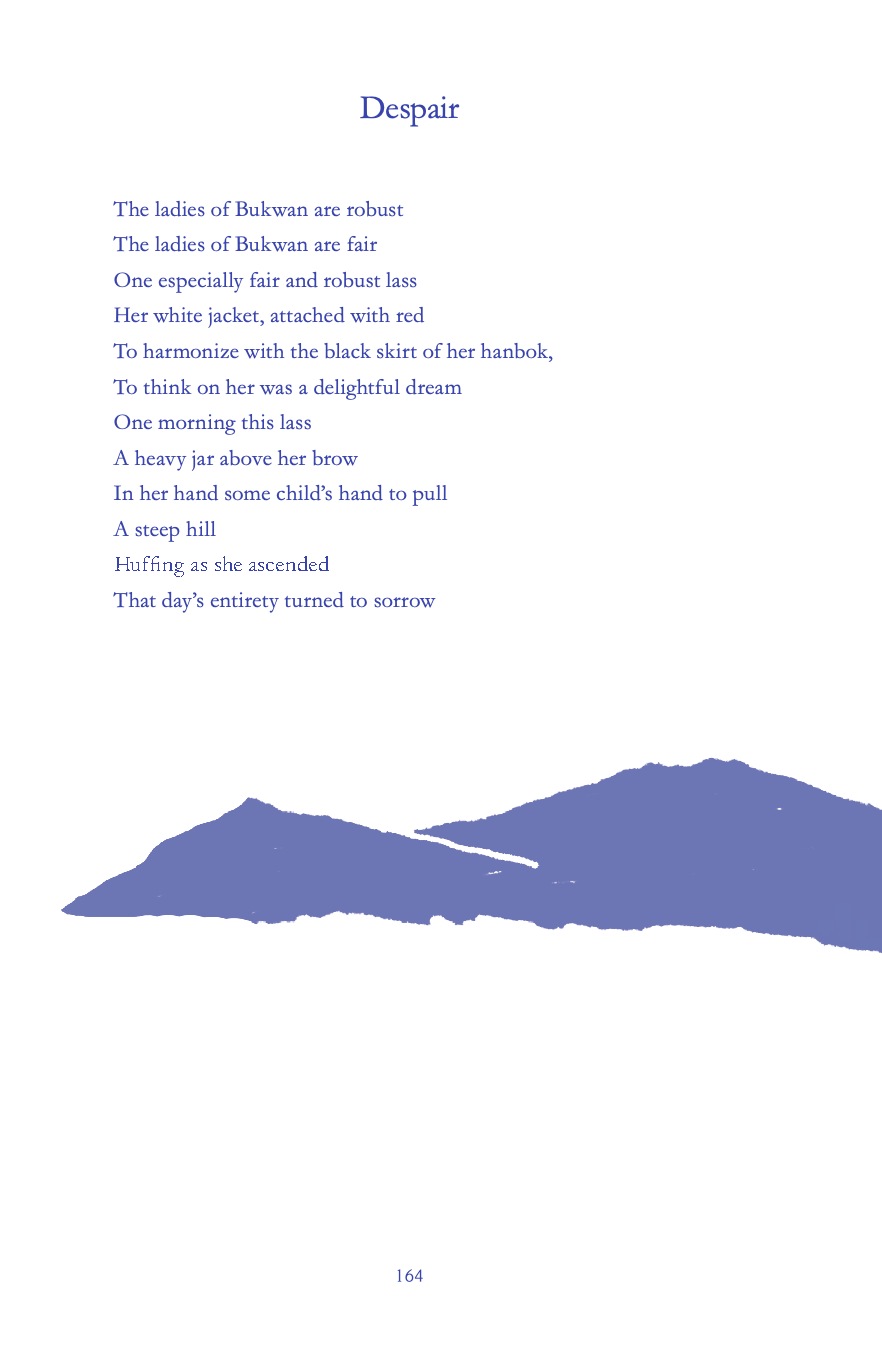
Complete front cover of Baek Seok: Poems of the North

The complete edition

Keep reading.
In both languages.

324-page illustrated hardcover. Korean originals and English translations by Peter N. Liptak, with artwork by Choi Joongwon.

Buy the hardcover · $28.95 ↗

Order directly from Exile Press on Shopify. Shipping and applicable tax shown at checkout.